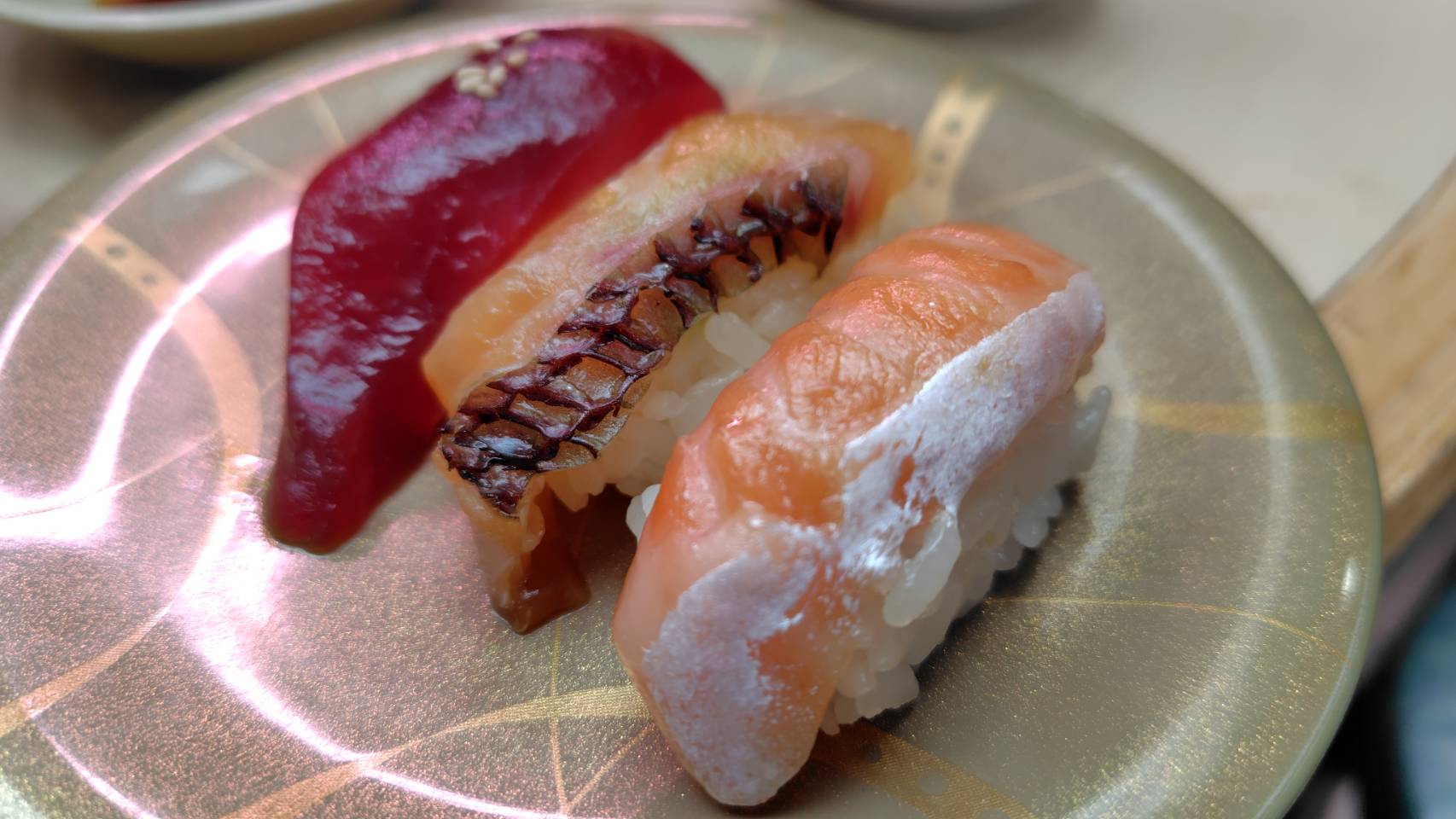
Most Japanese people don’t eat expensive sushi every day. We go to Kaiten-Sushi. Here is a logical guide to the system, etiquette, and must-try menus at Shibuya’s “Tenka Sushi.”
1. The Reality: We Don’t Live in a Michelin Guide
There is a misconception that Japanese people eat at silent, high-end sushi counters every day. We don’t. For us, sushi is often “Fast Food.” While “Counter Sushi” is for special occasions, “Kaiten-Sushi” (Conveyor Belt Sushi) is for daily life. It is casual, quick, and lively. If you want to see the real dietary habits of Tokyo, you must visit a conveyor belt place.
Today, I will guide you through “Tenka Sushi” in Shibuya. It is a retro, authentic spot that locals love.
2. The Logic of the Colored Plates
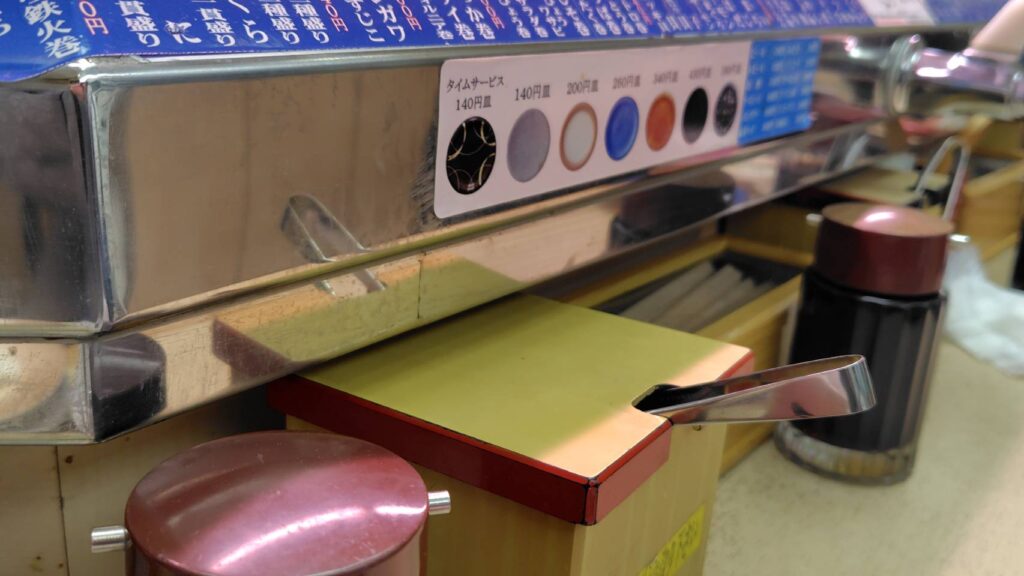
At Tenka Sushi, prices start from just 140 yen for two pieces. How do you know the price of what you are eating? Look at the color of the plate. The pattern or color of the plate corresponds to a specific price tier. You don’t need to ask the chef, “How much is this?” The accounting system is visual and transparent.
- Tip: You are free to take any plate you like from the rotating belt. If it looks good, grab it. No reservation needed.
3. Why Is It So Cheap?
Is the quality bad? No. The price is low because of extreme efficiency.
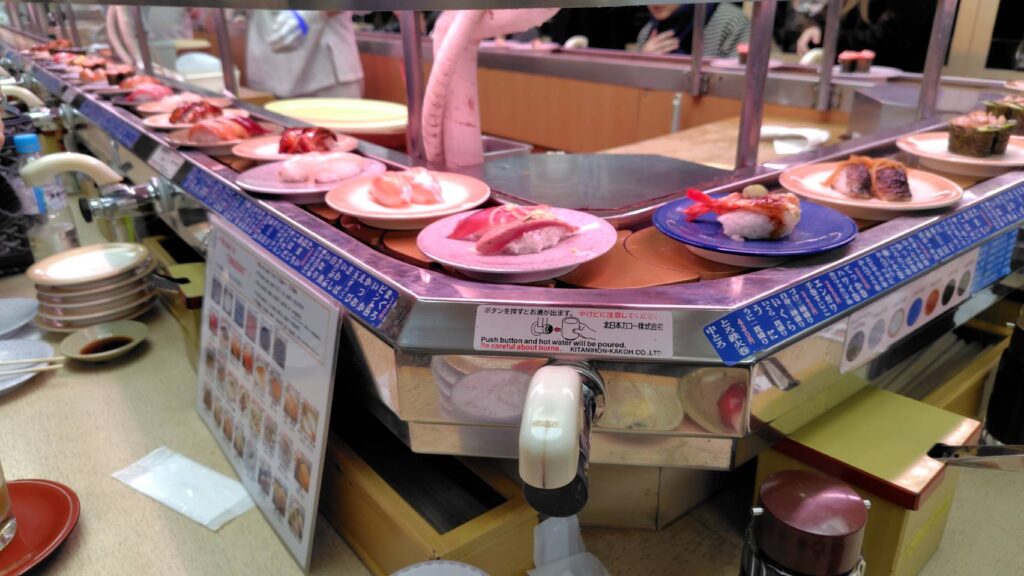
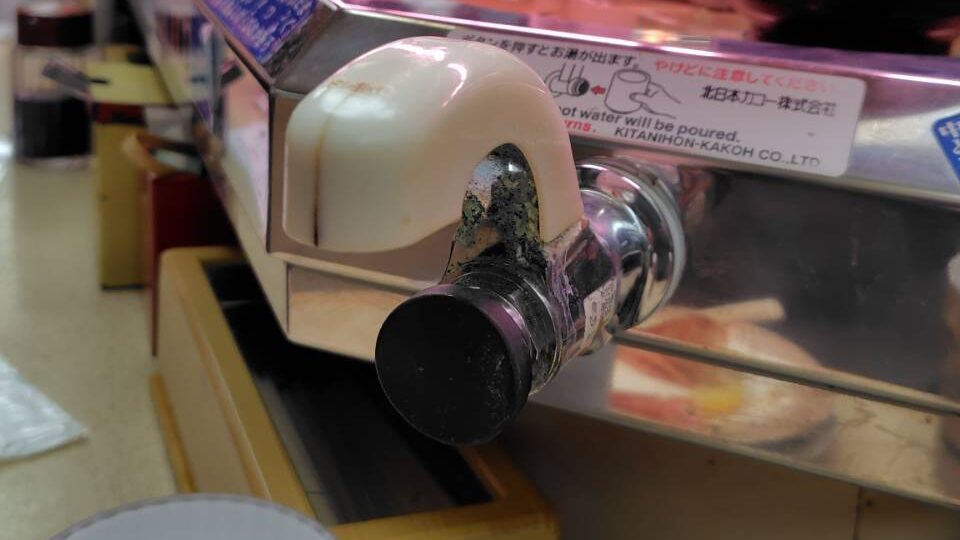
- Self-Service: You make your own tea (powder and hot water tap at the desk).
- High Turnover: Unlike high-end places where you stay for 2 hours, here, customers eat quickly and leave.
- Automation: The belt handles the logistics of food delivery. By cutting labor costs and increasing speed, they provide fresh fish at incredible prices. It is a victory of operational strategy.
4. Total Autonomy: You Are the Chef
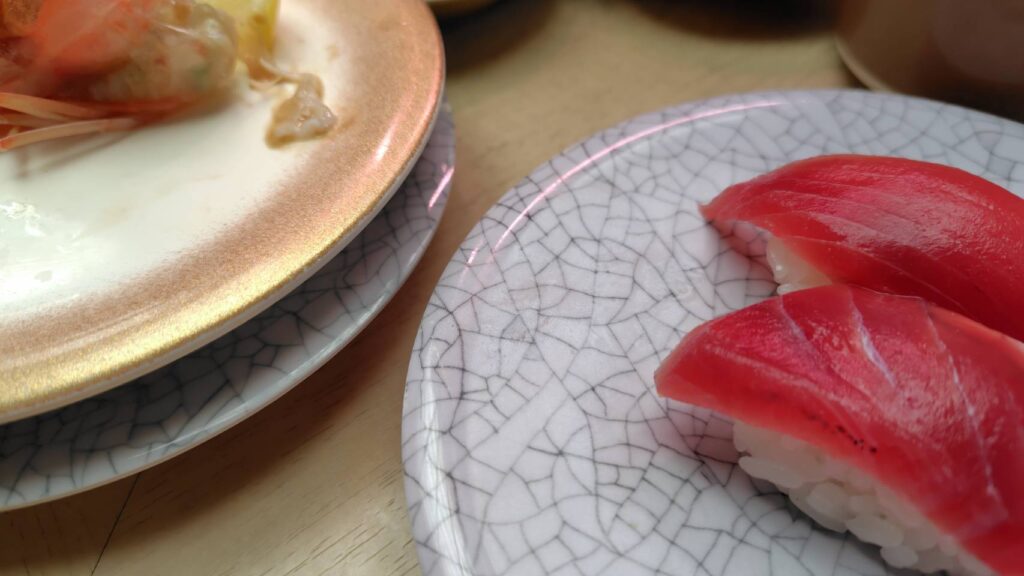
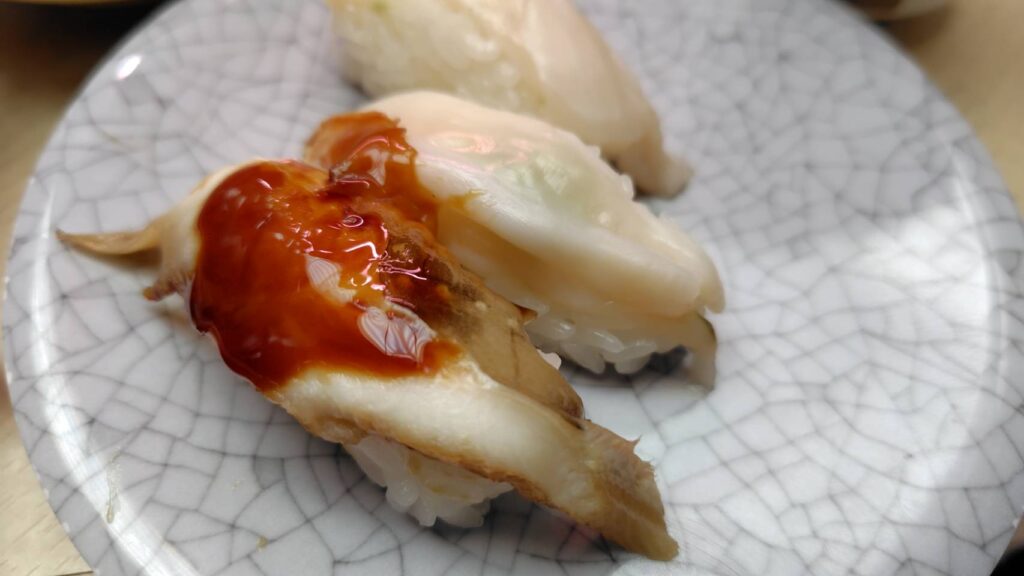
At an expensive Omakase (Chef’s choice) restaurant, you must wait for the chef to serve you what he thinks is best. You have no control. Kaiten-Sushi is the opposite. You decide what to eat. You decide the order. You decide when to stop. Do you want to start with heavy eel and end with light squid? Go ahead. Do you want to eat only salmon for 20 minutes? No one will judge you. This freedom of choice is the core philosophy here.
5. Essential Etiquette: The “Dip” Angle
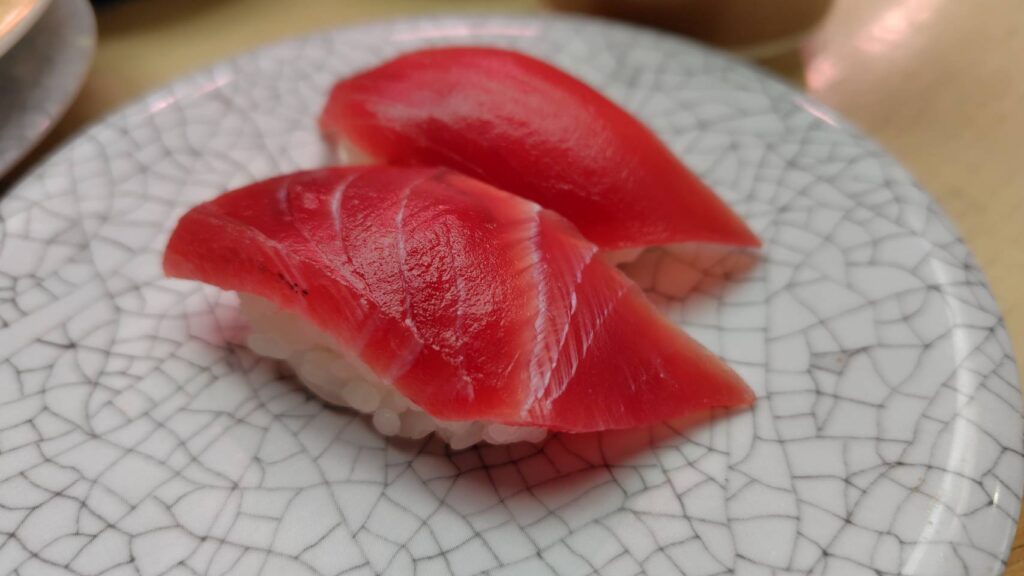
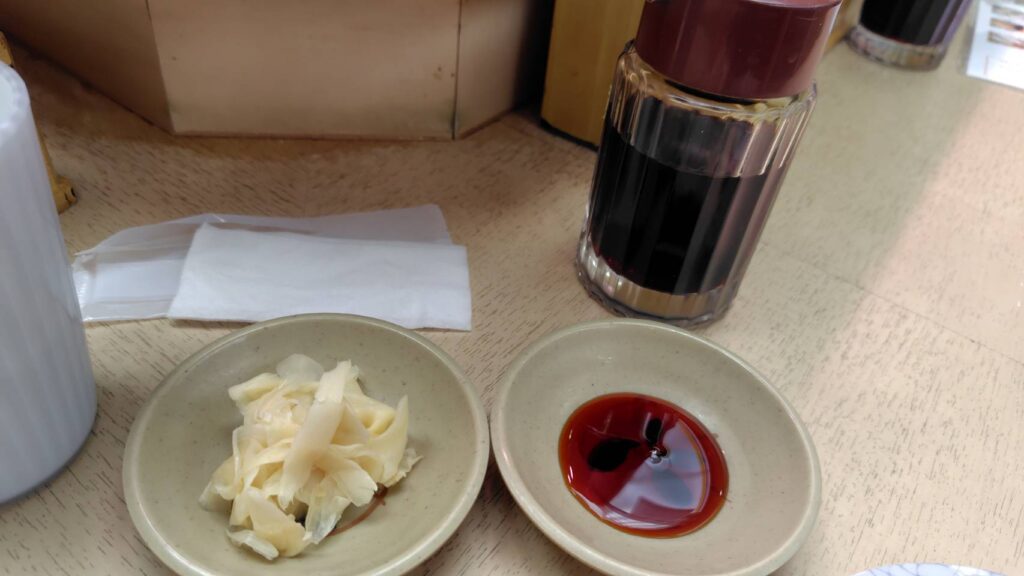
Even in a casual place, there is one rule that improves the taste: Do not dip the rice in soy sauce. Rice absorbs too much sauce and falls apart. Instead, use your chopsticks (or hands) to tilt the sushi slightly to the side. Dip only the fish into the soy sauce. This balances the flavors perfectly.
6. The “Crispy” Magic of Hand Rolls
While taking plates from the belt is standard, I recommend ordering “Hand Rolls” (Temaki) directly from the chef. Why? Because seaweed (Nori) absorbs moisture quickly. A freshly made hand roll has a crispy texture that vanishes in minutes. Enjoying that momentary crispness is a luxury you can only get by ordering fresh.
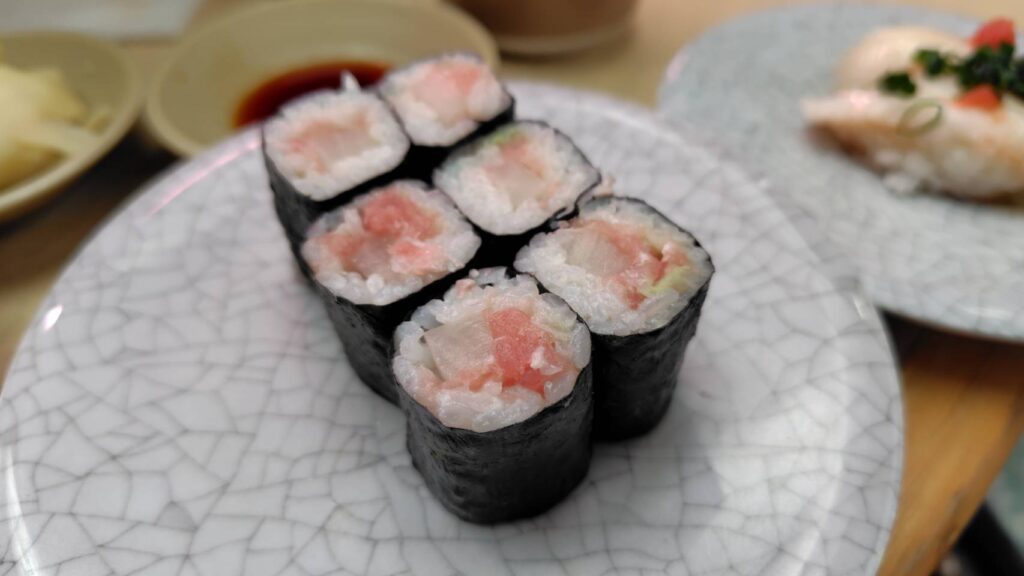
7. Taro’s Recommendations at Tenka Sushi
Don’t just stick to Salmon and Tuna. Be adventurous.
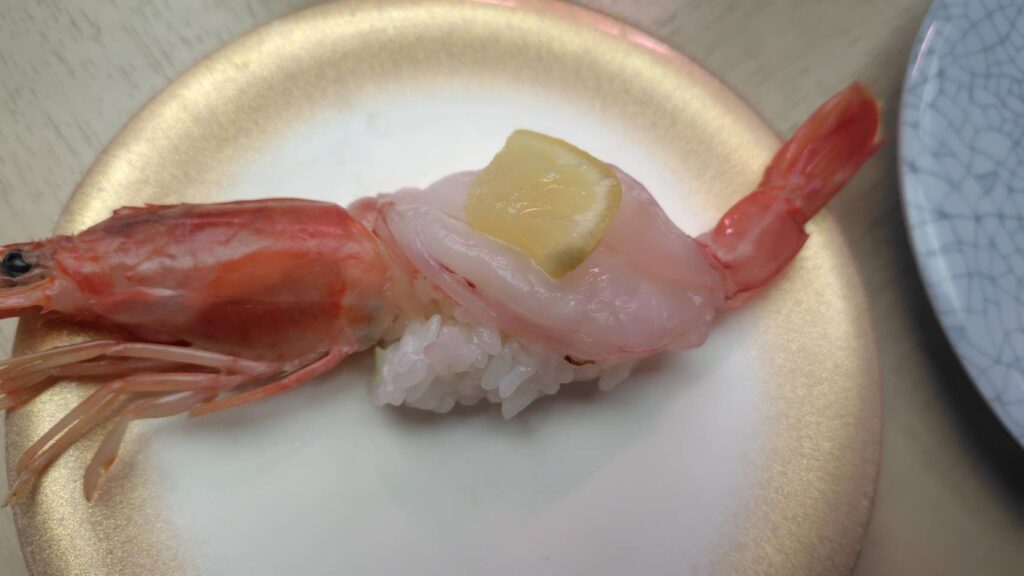
- Head-on Shrimp (Botan Ebi): It comes with the head still attached. It is visually striking and incredibly sweet.
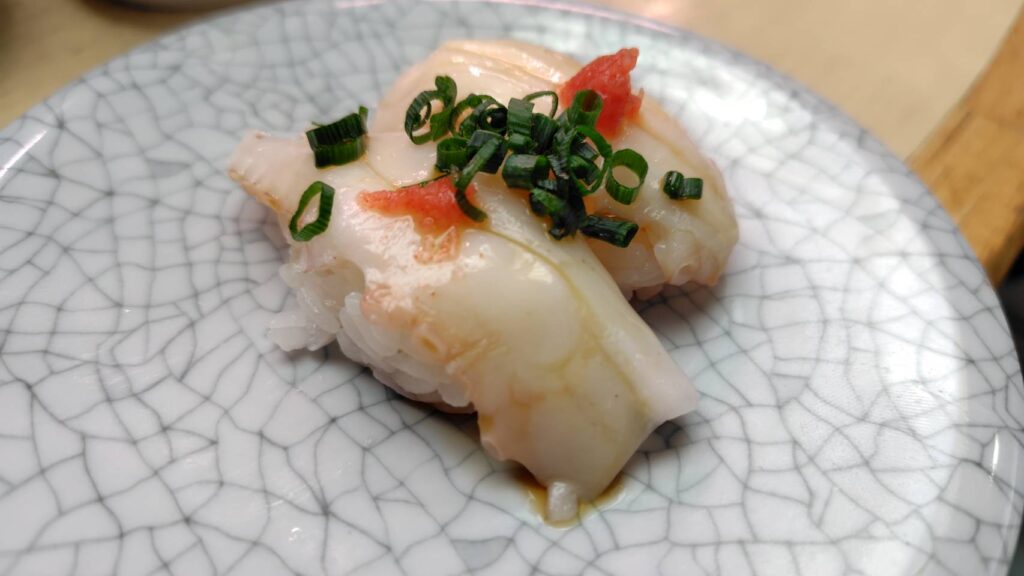
- Raw Octopus (Nama Dako): Unlike the boiled octopus usually found abroad, raw octopus has a unique, chewy texture and fresh scent. These items are rare in overseas sushi restaurants but are standard here.
Conclusion Kaiten-Sushi is not just a restaurant; it is a system designed for efficiency and freedom. It’s fast, it’s cheap, and it’s undeniably Japanese. Next time you are in Shibuya, skip the tourist traps and join the locals at the counter. Stack your plates high and enjoy the chaos.


コメント